
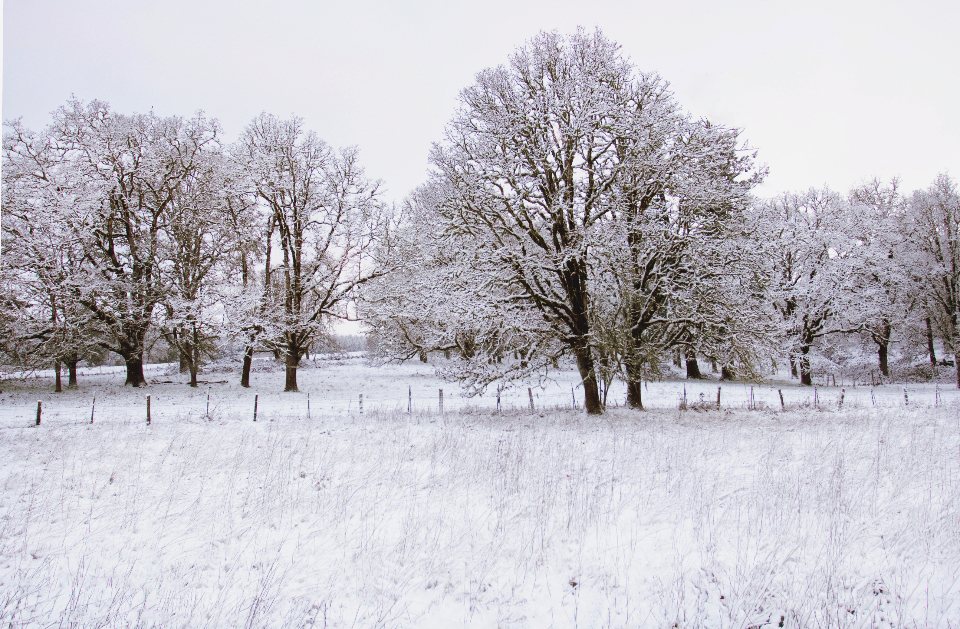
Most people stop eating outdoors somewhere around the end of September and start again in May. We think that is a loss of roughly seven months. Some of the best meals we have eaten outside were in frost, with breath in the air and a fire smell in our coats, and none of them required more than a little planning and a willingness to be slightly uncomfortable for the first ten minutes.
Cold-weather eating is not a survival exercise. It is a picnic with the settings changed. Warm food replaces cold, insulation replaces shade, and the meal gets shorter and more intense. This is how we do it.
Understanding the cold
The body loses heat in four ways outside: to the air, to the wind, to whatever it is touching, and through evaporation when it is damp. Sitting still for a meal makes all four worse at once, because you stop generating heat through movement. Wind chill is the one people underestimate. Air at two degrees with a brisk wind feels several degrees colder than the thermometer says, and the exposed skin on hands and face is where it bites.
The practical conclusions are simple. Choose a spot out of the wind: the lee of a wall, a hedge, a dip in the ground or a stand of trees. Sit on something insulating, because a cold bench or frozen ground will pull heat out of you faster than the air does. Keep dry at all costs. And eat and drink something warm early, before you feel cold, rather than as a rescue when you already are.
The flask, properly used
The vacuum flask, invented in the 1890s, is still the single most useful piece of cold-weather picnic equipment, and most people use it badly. The trick is to preheat it. Fill it with boiling water, close it, wait five minutes, empty it and then fill it with what you actually want to carry. A preheated steel flask will hold soup or tea near scalding for four or five hours; an unpreheated one gives up much sooner.
Food safety applies to warm food as well as cold. Hot food should stay above about 60 degrees until eaten, so a flask that is only lukewarm by lunchtime is worse than a cold meal. Wide-mouthed flasks are for stew, porridge, dal and thick soups; narrow ones for tea, coffee, hot chocolate and hot spiced juice. A separate small flask of plain boiling water is the most versatile item of all: it makes tea, warms a mug, thins a stew and thaws fingers.
Food that works in the cold
The best cold-weather food is dense, hot and eaten with one hand or a spoon. Thick soups and stews carried in a flask. Baked potatoes wrapped in foil and then a cloth, still warm after two hours. Flatbreads, wrapped the same way. Hard cheese, dried fruit, nuts and dark chocolate, none of which mind the cold. Hot sausages or roast vegetables cooked at home and carried in a preheated flask with a wide mouth.
Avoid anything that needs to be eaten with two bare hands, anything fiddly, anything with a lot of liquid to spill, and anything that goes unpleasant when cold, which includes most sandwiches with cheese in them. Butter sets hard below about ten degrees; oil-based spreads do not.
Drinks matter more than in summer. A hot drink does not raise core temperature much, but it warms the hands and the mouth and it makes everyone happier. Sweet drinks give quick energy; a savoury broth restores salt. Alcohol feels warming and is not; it opens the blood vessels in the skin and speeds heat loss, so a small glass with the meal is fine and a large one on a frosty hill is not.
A fire, where a fire is allowed
Nothing changes a cold meal like a small fire, and nothing needs more care. Rules vary enormously by country, region, land ownership and season: many parks and reserves prohibit open fires entirely, some allow them only in fixed rings or designated places, and most areas ban them in dry periods. Check with the authority in charge before assuming anything, and treat a bag of shop-bought fuel or a small raised fire bowl as the default rather than a fire on the ground.
If a fire is permitted, keep it small. A cooking fire the size of a dinner plate gives more usable heat than a bonfire and uses a fraction of the wood. Use dry dead wood collected from the ground, never cut anything living, and do not carry firewood from far away, because it can move tree pests and diseases with it. Put the fire out with water, not soil, until the ash is cold enough to touch, and leave no trace that you were there.
A fire also needs a job. Toast bread on a stick, warm a pan of soup, roast a marshmallow, keep the flask hot beside it. A fire that is only being watched tends to become a bonfire; a fire that is cooking stays small.
Blankets, layers and sitting warm
Dressing for a cold meal is different from dressing for a cold walk, because you will be still. What we carry, in rough order of importance:
- A closed-cell foam pad or a folded blanket to sit on, one per person.
- A big wool or fleece blanket to go over laps, shared, because shared warmth is real.
- An extra warm layer put on the moment you stop moving, not when you feel cold.
- A hat and a pair of thin gloves you can eat in, plus thick ones for after.
- Dry socks in a bag for anyone whose feet get wet on the way.
- A hot water bottle, filled from the flask, passed around like a cat.
Children get cold faster than adults and complain later, so check hands and feet rather than waiting. Older relatives and anyone with poor circulation need the sitting pad and the lap blanket first, before the food. For someone in a wheelchair, the chair itself is a cold seat; a pad and a blanket tucked under the legs make a large difference.
Keeping it short and good
A summer picnic can last three hours. A winter one is at its best at about forty-five minutes, from the first hot drink to the last of the chocolate, and it should end while everyone is still warm and pleased with themselves. The walk home is part of the meal; it restores the heat the sitting took away.
Try it on a clear, still day at first, around midday, in a place you know. Once you have eaten a hot stew from a flask with frost on the grass and a robin watching for crumbs, the idea that the outdoors closes for the winter will seem faintly ridiculous.
Read next: 10k Steps Is How Many Miles? A Practical Answer for Walkers