
The seasons are easiest to enjoy when you know roughly what to look for and when. This guide explains why the year changes the way it does, what each season tends to show you on a short walk, and how a few lines in a phone note can turn scattered outings into a picture of your own patch.
Why the Year Changes the Way It Does
Knowing the cause of the seasons helps you predict what you will see, so it is worth a minute. The year divides into four seasons because the Earth is tilted on its axis as it travels around the Sun. That tilt means each half of the planet receives different amounts of sunlight as the months pass, which produces steady shifts in temperature, daylight and the lives of plants and animals.
The practical point is that light leads and everything else follows. Longer days wake plants and animals; shortening days send them toward rest or departure. If you pay attention to daylight, you will rarely be surprised by the rest.
One caution. The four-season pattern is typical of temperate, mid-latitude regions. Tropical places may be better described by wet and dry seasons, and polar regions swing between very long days and very long nights. If you live somewhere that does not fit the four-part calendar, keep the habit of watching but adjust the labels to what your own climate does.
Timing also varies from year to year, and climate change is shifting seasonal patterns, including earlier springs. Treat any month attached to a sign as a rough guide rather than a deadline, and let your own notes tell you what is normal where you live.
What to Look For in Each Season on a Short Walk
You do not need a long route. Twenty minutes from your door is enough if you decide in advance on one or two things to find. Here is a simple set for each season.
Spring: things waking up
Spring brings warming temperatures, longer days and the reactivation of plant and animal life. On a short walk, look for buds opening on trees, the first flowers, and birds returning from migration.
Spring weather can be unsettled, with rain, late frosts or flooding in some regions, so choose paths with decent drainage and carry a waterproof layer.
Summer: growth at its peak
Summer is when plants grow fastest and many animals are most active. A short walk now is more about abundance: insects on flowers, dense leaf cover, birds moving between hedges and trees. Heat can be a real strain in some areas, so go early or late, take water and favour shade. The point of a summer outing is to notice, not to push through.
Autumn: colour and harvest
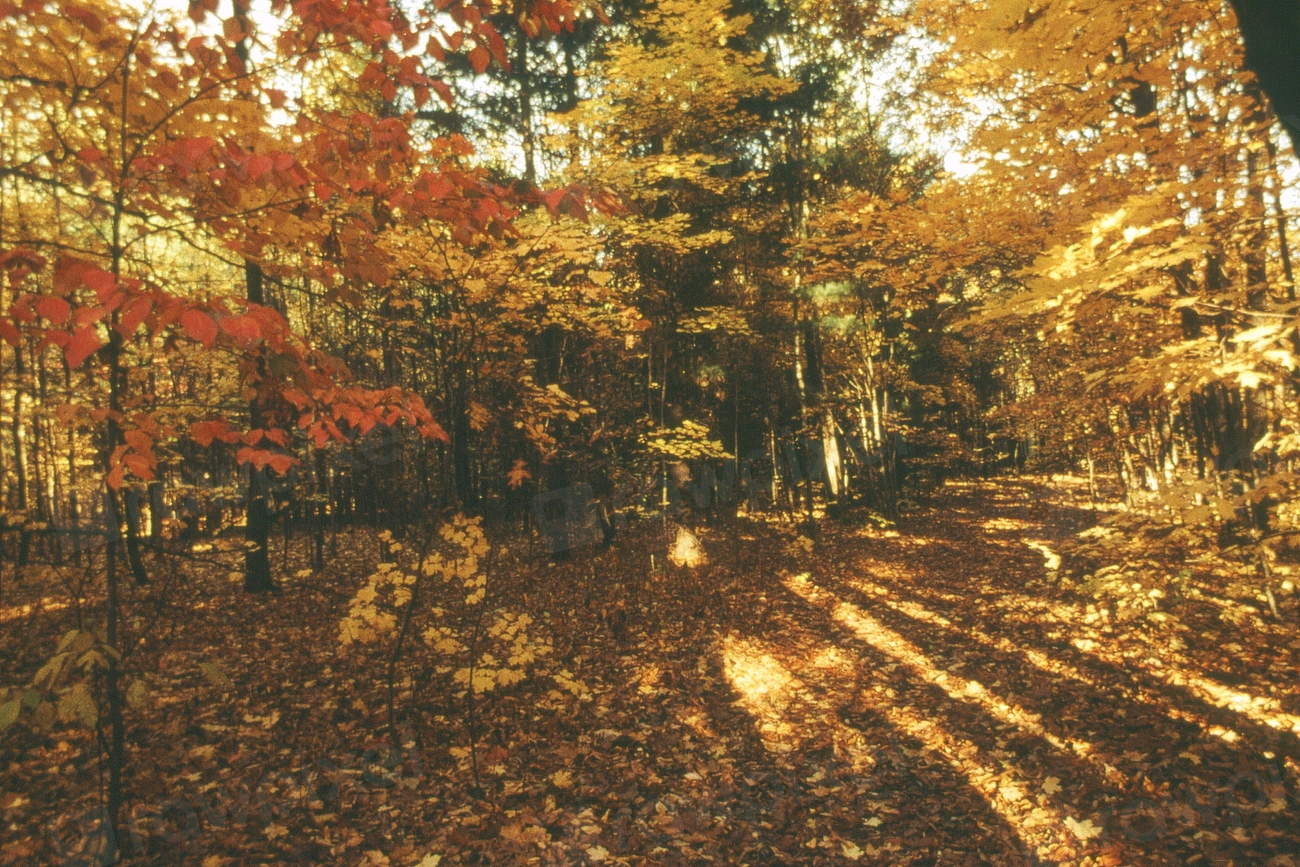
As temperatures cool and days shorten, the leaves of many deciduous trees change colour. That happens as chlorophyll breaks down and other pigments show through, giving reds, oranges and yellows. Autumn is also a time of harvest, and some animals store fat or migrate. On a short walk, look at leaf colour, at seeds and fruit, and at damp ground and logs, where fungi tend to appear. Fungi are easy to enjoy by looking alone.
Winter: the quiet view
In winter, days are shortest and many plants are dormant, while some animals reduce their activity to save energy. With the leaves gone, the shape of trees and the structure of the landscape become visible. Cold mornings can bring frost patterns on grass, puddles and glass, which are worth a slow look. Plan for earlier darkness and keep the route simple.
How Changing Light Shapes What You Can See
If you remember one thing from this guide, make it the light. Daylight length is the clock that most seasonal change follows, and it also decides when you can go out and what is visible when you do.
In summer, the Sun is at its strongest and days are longest, so you have plenty of time to fit in a walk, but the middle of the day can be harsh and hot. Early morning and evening are kinder, and they are often when wildlife is moving.
In autumn, the days shorten and the dark arrives earlier, so a walk after work may mean finishing in dusk. Move your outing to lunchtime or the weekend morning, or pick a route you know well and that is easy to follow in poor light.
In winter, daylight is at its scarcest. The upside is that a low sun and bare branches show you things you cannot see in summer, such as nests in empty trees and the outline of the land. Further from the equator these effects are stronger, so adjust expectations to your latitude.
A useful habit is to notice, once a month, roughly when it gets light and when it gets dark. You do not need exact figures. Just register that the evenings are drawing in or opening out, and the rest of the seasonal picture will make more sense.
Keeping a Loose Seasonal Log
A log is what turns pleasant walks into a pattern you can read. It does not have to be neat or long. A note on your phone, a few words in a pocket notebook, or a quick sketch is plenty.
What to write down
- The date and the place, even if it is just your usual loop.
- One thing that has changed since last time, such as leaves, birdsong, water level or colour.
- One thing that is new to you, even if you cannot name it.
- The light and the weather in a few words.
Why it works
Because timing shifts from year to year, your own records are the best guide to what is normal in your patch. After a few months you will start to see sequences: which plants come first, when the birds change, how the light moves along your usual route. After a full year you will have your own seasonal calendar, which is more useful to you than any general chart.
Keep it low pressure. If you miss a month, carry on. If you cannot identify something, write what it looked like and move on. A photograph taken from the same spot each time is a simple way to show change without any writing at all.
Choosing Your First Markers and Keeping It Gentle
With a whole year to cover, it is easy to feel you should know everything. You do not. Pick one marker per season and let the rest come in time.
- Spring: choose either buds on one tree or the first sign of life in a pond or ditch.
- Summer: choose a flowering plant or hedge and watch who visits it.
- Autumn: choose one tree and follow its leaf colour from week to week.
- Winter: choose the same bare branch or patch of ground and see what the cold does to it.
Returning to the same spot is more rewarding than covering new ground, because change is only visible against something familiar. A bench, a gate or a small stretch of path works well as an anchor.
Match the outing to the weather and to how you feel. Wet spring days, hot summer afternoons and dark winter evenings call for different choices, and a short, close-to-home walk is always an acceptable answer. If you are unsure of a path, check its surface and access before you go. The aim is regular time outside, and a seasonal marker gives each walk a small reason to happen.
Related reading
- The First Ten Birds: A Gentle Start to Birdwatching from the Doorstep
- Fungi Walks in Autumn: Looking Without Picking
Sources
- A Clear Guide to Spring, Summer, Autumn, and Winter (ir.mountaintopuniversity.edu.ng, accessed 2026-11-24)
Photo: Scenic photo of sunlight streaming, by U.S. Department of Agriculture, CC0 1.0 (Rawpixel, via Openverse)