
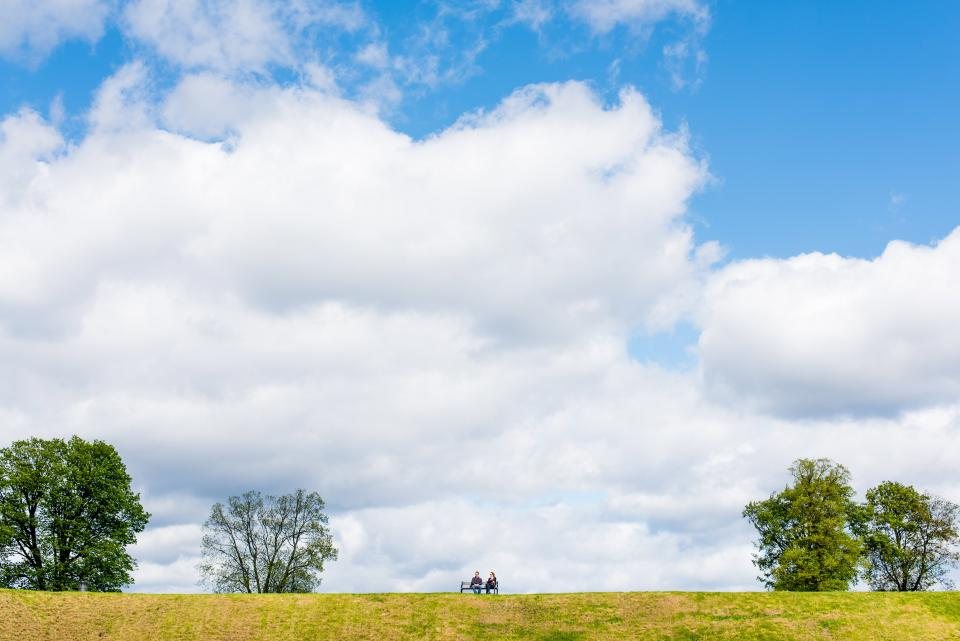
There is a moment, usually somewhere in a parent’s seventies, when the walk changes hands. For decades they set the pace and we followed; now we are choosing the route and quietly checking the ground ahead. It can be a sad shift if we let it be. It can also be one of the best things we ever do together, because a slow walk is an unhurried hour of conversation, and because the outdoors is one of the few places where an older person is not a patient, a dependant or a worry, but simply a person out for a walk.
The craft is in making the walk fit the walker. Not shorter and duller, but shaped around the things that actually change with age: pace, balance, stamina, sight, hearing, temperature and the need to sit down. Here is what we have learned about each.
Speed is the first thing to let go of
A healthy adult walks at around 5 kilometres an hour. Many people in their late seventies and eighties walk at 2 to 3 kilometres an hour on the flat, and slower on anything uneven. That is not a problem to be fixed; it is the pace of the walk. The mistake we all make at first is to walk ahead and then wait, which feels to the slower person like being hurried and to the faster one like stopping and starting. Walking side by side, or half a step behind, at their speed, is the whole method. On a narrow path we put them in front so they set the rhythm and we can see how they are managing.
Distances follow from pace. An hour’s walk at 2.5 kilometres an hour with two sitting stops covers about 2 kilometres. That sounds small on a map and is a genuine outing on the ground. We plan loops of 1.5 to 3 kilometres to start with, always with a short cut back to the car or the bus if the day goes badly, and we let the walk grow over the months if it wants to.
Ground, edges and the fear of falling
For an older walker the danger is rarely the distance; it is the fall. Hip fractures and the loss of confidence that follows them change lives, and much of that risk lives in a few kinds of ground: loose stones underfoot, wet leaves on a slope, tree roots across a shaded path, kerbs and single steps that are easy to miss, and anything with a camber that pushes the feet sideways. Level, firm, wide paths with a clear edge are the safest, which is why canal towpaths, promenades, park paths and old railway lines are the classic routes for this kind of walking.
Poles help more than people expect. A single stick is for style and a pair of walking poles is for balance; two points of contact on the ground, adjusted so the elbow sits at a right angle, turn a wobbly descent into a steady one. Good shoes matter too: a shallow, grippy sole with a firm heel, not slip-on shoes or the soft-soled kind that roll on gravel.
We also think about light. Eyes in their eighties let in far less light than eyes in their twenties, and contrast is harder to see, so a step in shade, a change from tarmac to gravel or a grey kerb on grey ground can be invisible. We walk in the middle of the day in winter, avoid dusk on unfamiliar ground, and say what is coming: “step down here”, “roots for the next bit”.
Benches, toilets and the shape of a good route
The route we want has a bench every 300 to 500 metres and a toilet at the start or at the halfway point. That is not a low ambition; it is a design brief. Sitting down every ten minutes is what lets a person with a heart condition, arthritis or simply eighty-five years of walking keep going for an hour. When a route has no benches, a folding three-legged stool weighs less than a kilogram, hangs from a pack and turns any stretch of path into a place to rest. Low walls, fallen logs and the edges of picnic tables count too.
Toilets shape the length of a walk more than we like to admit. Many older people take medication that increases how often they need to go, and worry about it more than they will say. A route that begins at a cafe, a visitor centre or a car park with facilities, and passes another halfway, takes that worry off the table. If there is nothing, we say so beforehand so nobody has to pretend.
Heat, cold and the things in the bag
Older bodies hold temperature less well in both directions. In cold weather the body warms itself more slowly and does not always signal that it is cold, so we add a layer before it is needed rather than after, and keep hands and head covered. In heat, thirst comes late and some blood pressure and heart medicines make overheating and dehydration more likely, so we walk early or late in summer, keep to shade, and drink at every bench whether or not we feel like it.
Our bag is short and specific:
- Water, and something sweet in case of a dizzy spell.
- Their medication for the day, and a note of what it is, in case a stranger has to help.
- A light waterproof and a warm layer even on a fine day.
- A folding stool if the route has few benches.
- A phone, and a plan for what to do if they cannot continue: where the nearest road is, who to call.
Hearing, talking and the point of it all
Hearing loss quietly removes people from conversations, and the outdoors is loud: wind, traffic, water, gravel underfoot. Walking on the side of their better ear, facing them when we speak, stopping to talk rather than talking over a shoulder, and choosing a sheltered path rather than a windy ridge all keep the conversation going. And the conversation is the point. A walk is one of the few settings where two adults can talk for an hour without the pressure of eye contact, which is why difficult things and old stories come out on paths and not at kitchen tables.
Letting the walk be theirs
The hardest part is not the planning but the manner. It is easy to slip into managing: choosing, steering, warning, checking. A parent who is being managed feels it, and the walk becomes something done to them. So we ask where they would like to go, we let them decide when to turn back, we do not comment on the pace, and we sit on the bench for as long as they want to sit on it. If the “walk” becomes twenty minutes of walking and forty minutes of sitting by the water, watching ducks and saying nothing, that is not a failed walk. That is exactly what we came for.