
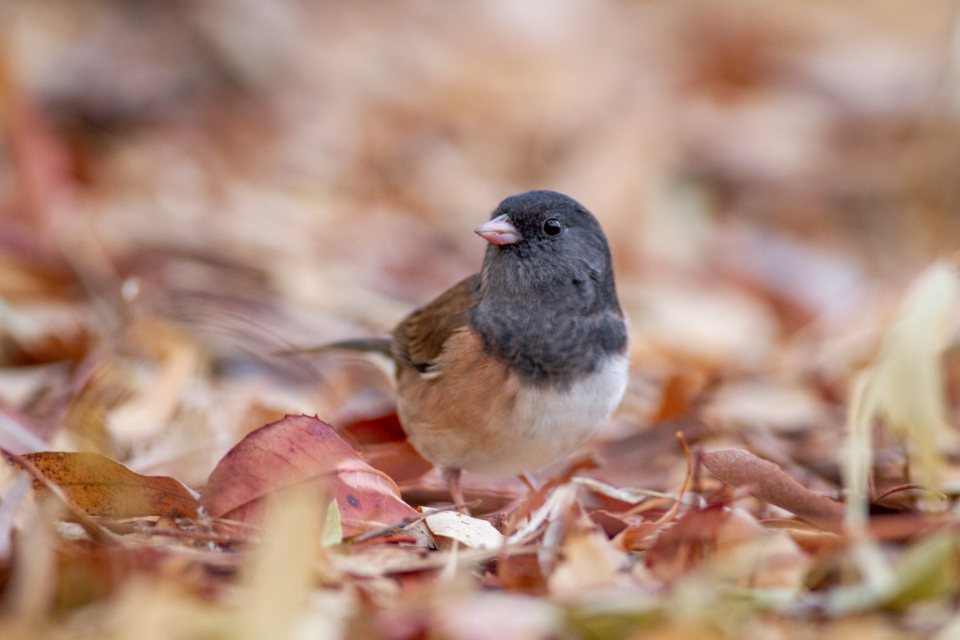
A city park looks like a simple place: mown grass, a few big trees, a pond, a path. Walk through it every day for a year and it turns out to be one of the busiest habitats within reach of most of us. Parks are edges, and edges are where life concentrates. The lawn meets the shrubbery, the pond meets the bank, the old tree meets the sky, and something is using each of those boundaries.
This is not a guide to rare species. It is a guide to the ones you will almost certainly see, and a few you will not see but can find the signs of, in an ordinary park in a temperate city. We have kept it to what can be checked with your own eyes on a slow walk.
The birds you will meet first
The feral pigeon is the bird everyone sees and nobody looks at. It is the descendant of the rock dove, a cliff-nesting bird, which is why it treats window ledges and bridges as home. Watch a flock on a lawn and you will see courtship, a strict pecking order and colours from pure white to rust.
Beside it, look for the crows and their relatives. Magpies work in pairs and check the same litter bins each morning. Carrion crows or hooded crows, depending on where you live, will drop nuts on hard paths to open them. Jays are shyer, but in October they bury acorns in the grass and can be watched doing it from a bench.
Blackbirds run and stop, run and stop across the grass; robins follow anyone turning soil. Tits and finches work the trees. In many European cities, ring-necked parakeets, descended from escaped birds, have become loud, green, established residents since the 1970s, and their screech now belongs to the park as much as the pigeon’s coo.
The pond
A park pond is a compressed wetland. Mallards are the constant, and the drakes moult into a dull brown plumage for a few weeks in midsummer, which puzzles many visitors. Coots with white foreheads and moorhens with red ones patrol the margins and build untidy nests in full view. A heron will appear early in the morning, standing so still that people walk past it, and will leave at the first dog.
Look at the water itself. Pond skaters ride the surface tension. In spring, clumps of frogspawn appear in the shallows; in early summer, damselflies in electric blue rest on the reeds. If the pond has any margin of untidy vegetation at all, it will have dragonflies patrolling by July, and bats hunting over it at dusk.
Mammals, mostly at the edges of the day
The grey squirrel, introduced to Britain from North America in the late nineteenth century, is the mammal every park visitor knows. It is worth watching properly: the tail signals, the spiral chases in late winter, the drey of leaves high in a fork. Where red squirrels survive, they prefer conifers and are far shyer.
Foxes live in most large cities in Europe and North America and use parks as corridors. You will see them at dawn or after dark, trotting along a path with the confidence of a regular. Hedgehogs are rarer than they were and mostly nocturnal, but their droppings, dark and glittering with beetle wings, turn up on paths. Bats are easiest to see against the last light over the pond; the common pipistrelle weighs about five grams and can eat thousands of small insects in a night.
Rats are present in any park with a pond and a bin. They are part of the ecosystem the park has built, whether we like it or not, and the best way to keep their numbers down is not to feed the ducks bread.
Trees, and what depends on them
The big trees are the park’s oldest residents and its most crowded. A mature oak in northern Europe supports well over two thousand species of insects, fungi, lichens and birds. Plane trees, with their flaking bark and hanging seed balls, were planted in cities in large numbers in the nineteenth century because they tolerate smoke and compacted ground. Limes drip honeydew in July and hum with bees in flower.
Dead wood is where much of the life is. A standing dead trunk or a fallen limb left in place feeds beetles, hosts fungi and provides holes for nuthatches and woodpeckers. A good park keeps some of it; a tidy one does not. Look at the base of old trees for fungi in autumn and at the bark for the small green and grey patches of lichen, which tell you something about the air.
The small print
Most of the park’s population is small and passes unnoticed. A few things to look for once the birds and squirrels have become familiar:
- Bumblebees on the first crocuses in February, often queens fresh from hibernation.
- Ants farming aphids on the undersides of lime and sycamore leaves in summer.
- Snails and slugs on the paths after rain, and the thrush that eats them on its favourite stone.
- Galls, the strange growths on oak and rose leaves, each made by a specific tiny wasp or midge.
- Earthworm casts on the lawn in autumn and the crows that walk the grass hunting them.
- Moths around the park lamps on a warm night, and the bats that hunt them there.
None of these require a name to be enjoyed, but a small field guide or a free identification app makes the park more interesting rather than less. Start with the ten commonest birds and the five commonest trees, and add from there.
A park is a year, not a visit
The most useful thing we can suggest is to visit the same park across the whole year, at different times of day. The winter park is bare and honest, with nests visible in the trees and gulls on the frozen pond. The spring park is loud. The summer park is quieter than people expect, with birds finished singing by July and the interest shifting to insects. The autumn park is fungi, seed, colour and squirrels working overtime.
A city park is not a substitute for wilder places. It is a place in its own right, with a population that has adapted to us, and it is open every day, ten minutes from the front door. That is not a small thing.
Read next: Skyline Drive Trails: How to Pick a Walk Along the Ridge Road